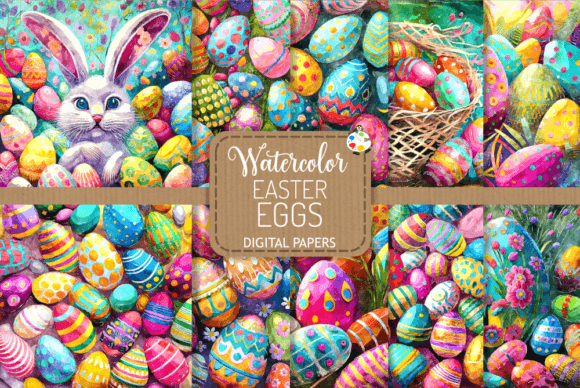
Watercolor Easter Eggs Nest Clipart for Creative Projects
If you have ever hunted for the right visual to carry a spring campaign, an Easter promotion, or a seasonal brand refresh, you know the struggle. Stock photos feel stiff. Generic vector eggs lack warmth. Then you land on Watercolor Easter Eggs Nest Clipart, and something clicks. The soft washes of color, the organic edges, the way the nest seems to hold light as much as it holds eggs — it feels less like a graphic and more like a painting. That is exactly the point. This clipart style brings a handmade, tactile quality to digital and print work, and for designers, marketers, and small business owners, that makes all the difference.
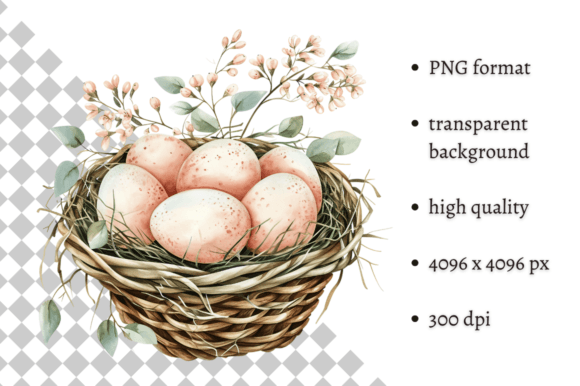
Watercolor Easter Eggs Nest Clipart refers to digitally rendered or scanned watercolor illustrations of Easter eggs arranged in a nest. The style typically features pastel and jewel-toned eggs with visible brush textures, soft gradients, and irregular edges that mimic real watercolor paint on paper. The nest itself is often painted with loose, feathery strokes that suggest straw or twigs without being overly detailed. The result is a set of design assets that feel airy, nostalgic, and celebratory without tipping into cartoonish territory. For anyone building a brand identity around spring, renewal, or family-friendly themes, this clipart offers a rare blend of polish and personality.
What Makes This Clipart Style Stand Out
The first thing you notice is the texture. Unlike flat vector illustrations, Watercolor Easter Eggs Nest Clipart carries subtle variations in opacity and tone. One egg might have a darker wash along its bottom edge, suggesting shadow. Another might have a tiny bloom of pigment where the brush lifted off the paper. These imperfections are what make the set feel authentic. In an era where so much design relies on clean lines and predictable gradients, a bit of watercolor unpredictability reads as honest and warm.
The color palette deserves attention too. Most sets lean into soft pinks, pale yellows, mint greens, and lavender, but the best ones also include deeper accents like dusty rose, sage, or muted gold. That range allows you to use the clipart across different backgrounds — light, dark, patterned, or textured — without losing contrast or legibility. The nest itself is usually painted in earthy browns and ochres, which anchor the composition and keep all those pastel eggs from feeling saccharine.
Another defining trait is the scale and composition. The eggs sit clustered, often overlapping slightly, which creates depth. Some sets include loose eggs that float nearby, perfect for scattering across a page or layering behind text. The best Watercolor Easter Eggs Nest Clipart collections offer multiple angles: a top-down view, a slight three-quarter perspective, and perhaps a side view. That variety matters when you are building a cohesive layout across a website banner, a greeting card, and a social media graphic.
Where Watercolor Easter Eggs Nest Clipart Works Best
This style really earns its place across several project types. In logo design, a single watercolor egg from the set can become the centerpiece of a brand mark for an Easter brunch event, a spring bakery, or a children's boutique. The texture gives the logo a handcrafted feel that pairs well with a clean sans serif font for the wordmark. If the client wants something more whimsical, try pairing the egg with a script font for a friendly, approachable identity.
In editorial design, think recipe cards, lifestyle magazines, or Easter-themed issues. A full-bleed background using the nest clipart can anchor a table of contents or open a feature article. Because the watercolor style has soft edges, it does not compete with body copy. You can place a headline directly over a lighter area of the nest illustration and maintain strong readability. That is a huge advantage over busy photographic backgrounds.
Packaging design is another natural fit. Think artisanal chocolate boxes, tea tins, or gift tags for spring hampers. The watercolor texture signals craftsmanship, which aligns well with premium or handmade products. A small business selling organic soaps could use Watercolor Easter Eggs Nest Clipart on a limited-edition spring label, and the visual message would land instantly: fresh, gentle, seasonal.
For web design and social media graphics, this clipart works as hero imagery, section dividers, or accent elements. A landing page for an Easter sale could feature the nest illustration in the header, with a modern typography headline overlaid. On Instagram, the clipart can fill square posts, story backgrounds, or highlight covers. The watercolor style stands out in a feed dominated by sharp product photos and flat illustrations. It offers a visual pause.
Personal projects also benefit. Wedding invitations, birth announcements, or spring party decor all gain a thoughtful, artistic feel. Many crafters and hobbyists use this clipart to design printable banners, cupcake toppers, or thank-you tags. Because the files are usually provided in high-resolution PNG or transparent-background formats, printing is straightforward.
How It Shapes Visual Identity and Audience Perception
Using Watercolor Easter Eggs Nest Clipart does more than fill space — it communicates a specific tone. The soft, painted look suggests gentleness, nostalgia, and care. For a brand, that translates to trust and approachability. A daycare center that uses this clipart in its spring newsletter tells parents: we value warmth and creativity. An Etsy shop selling handmade baby gifts tells customers: every item is crafted with attention.
When you integrate this clipart consistently across brand identity pieces — website, packaging, social media, email headers — it builds recognition. People begin associating the watercolor texture and pastel palette with your brand, not just with Easter. That is the goal of any design asset strategy: your audience should recognize your visual language before they even read your name.
Readability also benefits if you use the clipart thoughtfully. Because watercolor edges are soft, they create natural negative space. You can place type directly over a light wash area and maintain contrast. Avoid placing text over the darkest parts of the nest or over eggs with high saturation. Instead, use the clipart as a background element with ample room for headlines or pull quotes. Pair it with a serif font for an elegant editorial feel, or with a handwritten font for a friendly, personal touch.
Practical Guidance on Choosing and Using This Clipart
Not all Watercolor Easter Eggs Nest Clipart sets are created equal. Here is what to evaluate before you download or purchase.
Resolution and format matter. Look for files at 300 DPI for print and at least 1500 pixels on the longest side for digital use. PNG files with transparent backgrounds give you the most flexibility. Some sets also include SVG versions, which are useful if you need to scale the illustration without losing quality. Avoid sets that look pixelated or overly compressed — that kills the watercolor illusion fast.
Check the included styles and variations. Does the set offer multiple egg colors? Are there eggs with patterns (dots, stripes, florals) alongside solid washes? Are there separate nest elements, loose eggs, and perhaps a few spring flowers or leaves? The more modular the set, the more layouts you can build. A set with ten eggs and one nest is limiting. A set with thirty eggs, two nest variations, and a few accent elements gives you serious creative range.
Consider your font pairing early. The clipart style leans feminine and soft, so choose typefaces that complement rather than fight that energy. A light sans serif font like Poppins or Montserrat in thin weight keeps things modern. A script font like Great Vibes or Playlist adds elegance. A handwritten font like KG Primary Penmanship brings a childlike charm that works well for classroom or family materials. Avoid heavy blackletter or aggressive display fonts — they clash with the gentle watercolor texture.
Review commercial licensing carefully. If you are a small business owner, a publisher, or a marketer using the clipart in products or promotions, you need a license that covers commercial use. Some clipart sets are for personal use only. Others allow limited commercial use with attribution. Many premium sets offer extended licenses that let you use the art in merchandise, digital products, and print runs up to a certain quantity. Read the terms before you buy. A good rule: if the price seems too low for commercial use, it probably is.
Test the clipart in your actual layout. Drop it into your design software and see how it behaves. Does the transparency layer well over other elements? Can you change the color of an egg by adjusting a hue/saturation layer, or does the watercolor texture break? How does it look at different sizes? Sometimes a beautiful close-up crop of one egg works better than the entire nest. Experiment before committing.
Realistic Examples of Watercolor Easter Eggs Nest Clipart in Action
Imagine a local bakery preparing for Easter. They want a limited-edition box for hot cross buns and a matching social media campaign. The designer sources a quality Watercolor Easter Eggs Nest Clipart set with soft pink, blue, and yellow eggs. The nest illustration goes on the box lid as a centered focal point, with the bakery name set in a clean sans serif font beneath. On Instagram, the same nest is cropped to a square format with a pastel overlay, and the week's specials appear in a light script font across the top. The campaign feels cohesive, warm, and premium — without requiring a photoshoot.
Another scenario: a children's book publisher needs illustrations for an Easter-themed activity sheet. The clipart replaces costly custom watercolor commissions. Eggs in different colors appear as counting objects, and the nest becomes the centerpiece of a "find the hidden eggs" game. Because the clipart is modular, the designer arranges elements freely and scales them to fit the page. The watercolor style keeps the activity sheet looking artistic rather than mass-produced.
For a blogger writing about spring crafting ideas, Watercolor Easter Eggs Nest Clipart can serve as a featured image, a Pinterest pin background, and a printable checklist download. The texture adds visual interest without distracting from the content. And because the clipart is consistent across all three formats, the blog post feels professionally designed.
Making the Most of This Design Asset
Watercolor Easter Eggs Nest Clipart is not a one-season wonder. With thoughtful use, the same set can work across Easter campaigns, spring branding, baby showers, garden-themed projects, and even gentle nature-inspired designs. The key is to treat it as a premium font or creative font in your toolkit — something you reach for when the project needs warmth, texture, and a human touch.
When you pair it with the right typeface, place it with intentional composition, and respect its soft aesthetic, you get work that feels both professional and personal. That combination is hard to achieve with stock photography or flat vectors. It is why designers, content creators, and entrepreneurs keep coming back to watercolor assets despite the abundance of cheaper, faster options.
Before your next spring project, spend some time browsing the available Watercolor Easter Eggs Nest Clipart collections. Look for texture that feels genuine. Look for a palette that matches your brand. Look for modularity that gives you room to create. When you find the right set, it will not just fill a layout — it will set the tone for everything else you build around it.