Sailor Teddy Bear Watercolor Clipart for Brands and Creative Projects
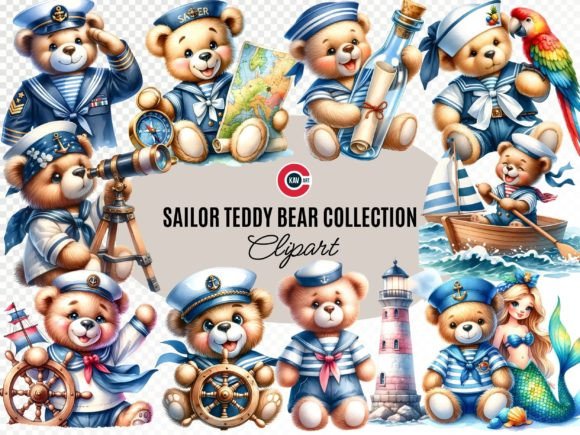
If you have spent any time browsing design assets for children’s products, nursery decor, or whimsical branding, you have likely noticed how difficult it is to find clipart that feels both handcrafted and polished. Many illustrations lean too cartoonish or too generic. Sailor Teddy Bear Watercolor Clipart sits in a sweet spot between painterly charm and practical versatility. These illustrations feature a teddy bear dressed in a sailor outfit—complete with a striped shirt, a little cap, and often a anchor or boat motif—rendered in soft watercolor washes. The edges are organic, the colors blend naturally, and the overall mood is gentle, nostalgic, and approachable.
What makes this set stand out is the watercolor technique itself. Instead of flat vector shapes, you get variable opacity, subtle bleeding between hues, and paper texture that mimics real watercolor on cold-press paper. The bear’s expression is usually soft and friendly, not overly saccharine. That restraint matters. It means the clipart can work across contexts where you want warmth without crossing into cliché. The sailor theme adds a subtle narrative element—adventure, travel, the sea—without screaming for attention.
Why Watercolor Clipart Resonates in Modern Design
Watercolor has become a staple in contemporary design because it offers something that rigid vector art often cannot: humanity. When you use Sailor Teddy Bear Watercolor Clipart in a project, you are introducing irregular brush strokes, color variation, and a tactile quality that feels made by hand. That matters for brand identity today. Consumers are tired of sterile, overly produced visuals. They respond to authenticity, even when that authenticity comes from a digital asset.
For designers and small business owners, this clipart works well because it solves a practical problem. You get the look of custom watercolor illustration without commissioning an artist or spending hours painting yourself. The files are typically high-resolution PNGs with transparent backgrounds, which means you can drop them into layouts instantly. Whether you are working in Canva, Adobe InDesign, Photoshop, or Procreate, the assets integrate without fuss.
The sailor teddy bear motif itself carries specific visual cues. The blue and white stripes contrast nicely with the warm brown of the bear. The red accents—often a bow or a flag—add a pop of color that draws the eye. These built-in contrasts make the clipart useful for establishing visual hierarchy without extra work. Place the bear on a soft pastel background, and it becomes a natural focal point. Layer it with text, and the organic edges keep the composition from feeling stiff.
Where Sailor Teddy Bear Watercolor Clipart Works Best
The applications for this asset go far beyond nursery decor, though that is an obvious starting point. Here are specific contexts where the clipart adds genuine value:
- Branding for baby and children’s products – Logo design, tags, packaging, and website headers benefit from the friendly, hand-painted feel. A children’s clothing line, a toy subscription box, or an organic baby food brand could use the sailor bear as a mascot or accent.
- Social media graphics – The watercolor style stands out on Instagram and Pinterest, where flat illustrations dominate. A single bear illustration paired with a quote or announcement creates a scroll-stopping post.
- Editorial design and publishing – Children’s books, magazines, and educational materials often need illustrations that feel warm but not distracting. The bear works as a chapter header, a page accent, or a recurring character.
- Packaging design – Gift wrap, stationery sets, and product labels gain a premium touch when the clipart is used as a repeating pattern or a hero image. The watercolor texture signals quality and care.
- Invitations and announcements – Baby showers, nautical-themed birthday parties, christenings, and even gender reveal events benefit from the sailor aesthetic. The watercolor style keeps the invitation feeling elegant, not kitschy.
- Digital products and printables – Planners, wall art downloads, sticker sheets, and coloring pages all work well because the clipart is already optimized for digital print.
How Clipart Influences Readability, Hierarchy, and Brand Perception
Even though we are talking about an illustration rather than a typeface, the same principles of visual hierarchy apply. When you place Sailor Teddy Bear Watercolor Clipart into a layout, it becomes an anchor. The soft edges and gentle color palette naturally guide the viewer’s eye without competing with text. If you pair the bear with a clean sans serif font for headlines and a readable serif or handwritten font for body copy, the contrast between organic illustration and structured typography creates balance.
For brand perception, the clipart communicates several things at once. The watercolor texture says handmade and thoughtful. The sailor theme suggests adventure, tradition, and a touch of whimsy. The bear itself is universally recognizable and non-threatening. Together, these signals build a brand identity that feels trustworthy and approachable. For a small business owner launching a children’s product line, that combination is gold.
Consistency matters too. When you use the same clipart across a website tagline, product packaging, and social media profile, you reinforce recognition. Customers begin to associate the bear with your brand. Over time, that visual shorthand builds loyalty. The clipart becomes a shortcut for the emotions you want to evoke: safety, nostalgia, joy, quality.
Practical Guidance for Choosing and Using This Clipart
Before you purchase or download a Sailor Teddy Bear Watercolor Clipart set, take a few minutes to evaluate your project fit. Here is a practical checklist:
- Examine the color palette. Does the set include variations in blue, brown, red, and neutral tones? Some sets offer multiple poses or accessories. Look for diversity so you are not stuck repeating the same image.
- Check the file format and resolution. Most quality watercolor clipart comes as PNG files at 300 DPI or higher. This ensures you can use them in print without pixelation. Transparent backgrounds are essential for flexible design work.
- Review the included styles. Some sets offer the bear in different positions—sitting, standing, waving, holding an anchor. Others include companion elements like clouds, waves, boats, or stars. The more assets you get, the more cohesive your layouts will look.
- Test font pairings early. The clipart’s soft, organic edges pair well with clean sans serif fonts like Montserrat, Lato, or Poppins for modern branding. For a more traditional feel, try a serif font like Playfair Display or a script font like Pacifico. Avoid pairing it with heavy, ornate typefaces that compete for attention.
- Consider readability. If you place text directly over the bear, use a semi-transparent overlay or position the text in areas with less detail. The clipart should enhance the message, not obscure it.
- Understand commercial licensing. This is critical for entrepreneurs and small business owners. Some clipart sets allow commercial use for products you sell, while others limit usage to personal projects. Read the license carefully. If you are creating merchandise, packaging, or digital products for sale, confirm that the license covers commercial reproduction. Some creators offer extended licenses for higher production volumes.
Design Observations and Recommendations
One thing that experienced designers notice immediately about good watercolor clipart is the way it handles transparency. Cheap clipart often has harsh edges or visible white halos where the background was removed. High-quality Sailor Teddy Bear Watercolor Clipart preserves the soft, feathered transitions of actual watercolor paint. That makes compositing easier and the final result more believable.
If you are using the clipart for logo design, consider integrating it with your brand colors. The bear’s natural blues and browns can be adjusted slightly in editing software to match your palette, but avoid oversaturating the tones. The watercolor texture works best when colors feel organic, not fluorescent. A quick tip: drop the opacity of the bear layer to 85% and blend it with a soft background. This gives the illustration a subtle depth that feels intentional.
For social media graphics, the clipart shines when paired with short, punchy text. Use the bear as a visual hook. Place it off-center, let the text wrap around the organic shape, and keep backgrounds minimal. The watercolor texture already provides visual interest; you do not need heavy patterns or gradients competing for attention.
Entrepreneurs launching a product line should consider using the clipart as a repeating pattern. A subtle all-over print of the bear and nautical elements on fabric or wrapping paper creates a professional, cohesive look. Just make sure the pattern repeats smoothly in the design file. Some clipart sets include pattern-ready elements, which saves a lot of setup time.
Final Thoughts on Fit and Versatility
Sailor Teddy Bear Watercolor Clipart is not a niche asset for children’s projects only. It works for any brand or creative project that needs warmth, storytelling, and a handmade aesthetic. The maritime theme adds a specific flavor, but the bear’s neutral expression and the watercolor style keep it adaptable. Whether you are designing a logo, building a social media presence, or creating a product line, this clipart provides a strong visual foundation that audiences respond to.
The key is to use it intentionally. Let the bear be the emotional center of your composition. Pair it with clean typography, simple backgrounds, and a consistent color story. When you treat the clipart as part of a broader design system rather than a standalone decoration, it elevates everything around it.