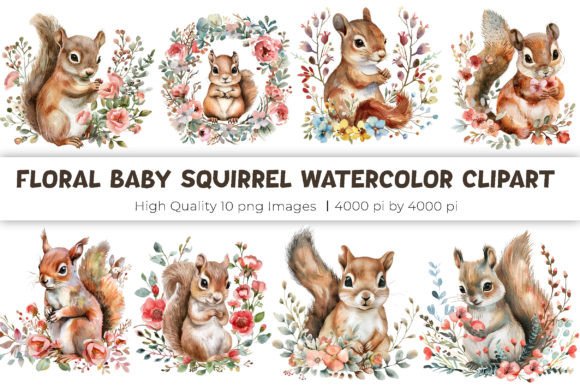
Watercolor Squirrel Clipart
If you have spent any time browsing design assets for nature-themed projects, you have likely stumbled across a category of artwork that feels distinctly alive. Watercolor squirrel clipart sits in that space. It is not a sterile vector icon or a hyper-realistic photograph. It carries the looseness, the texture, and the happy accidents that only a watercolor wash can deliver. Squirrels themselves bring a certain energy—playful, quick, curious. Combine that with the soft bleeding edges and unpredictable grain of watercolor, and you get an illustration style that feels both nostalgic and fresh. For designers, small business owners, and content creators who want to inject warmth and personality into their work, this type of clipart offers a shortcut to genuine emotional resonance.
The appeal is not complicated. Watercolor squirrel clipart looks handcrafted even when it is delivered as a high-resolution digital file. That handmade quality matters in a landscape oversaturated with flat, cookie-cutter graphics. Audiences are drawn to imperfection—the slight variation in color density, the tiny splatters, the uneven edges. These details signal authenticity. Whether you are designing a children's book page, a brand logo for an organic snack company, or a social media post for a wildlife nonprofit, watercolor squirrel clipart brings a tactile, organic feel that standard digital illustration often lacks.
The Visual Personality of Watercolor Squirrel Clipart
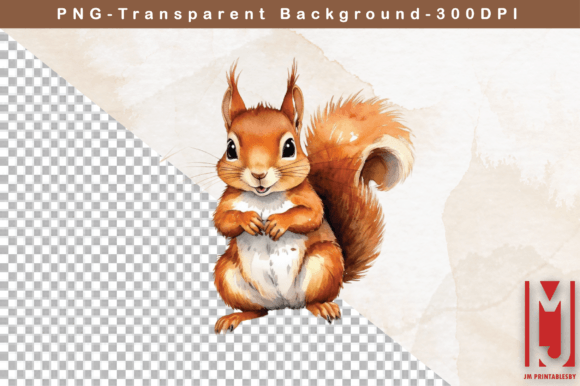
Let us get specific about what you are actually looking at. Watercolor squirrel clipart typically features soft, translucent washes of color layered to create fur texture, shadow, and depth. The squirrel might be sitting on a branch holding an acorn, leaping between trees, or simply staring with those big, expressive eyes. The background is often transparent or gently stained with color, making it easy to drop into any layout. The style leans toward the whimsical but can range from realistic enough to identify the species—gray squirrel, red squirrel, flying squirrel—to highly stylized and almost abstract.
The color palette is worth noting. Watercolor squirrel clipart usually relies on earthy browns, warm grays, rusty oranges, and soft creams. You will also see accents of green for leaves, blue for sky backgrounds, or muted yellows for autumn settings. Because watercolor naturally blends and bleeds, the transitions between colors are gentle. There is no harsh line work unless the artist added ink outlines afterward. This gives the artwork a poetic, storybook quality that feels inviting rather than aggressive. It is a style that whispers rather than shouts, which is exactly what many brand identities and editorial projects need.
Personality-wise, this clipart is approachable. It does not feel corporate or stiff. It feels like something you would see in a handmade card from a friend or in the pages of a beautifully illustrated field guide. For marketers and publishers trying to build trust and approachability, that is gold. A squirrel rendered in watercolor immediately signals that you care about craft, detail, and the natural world. It is a subtle cue, but audiences pick up on it.
Where This Artwork Shines Across Projects
Watercolor squirrel clipart is not a one-trick pony. Its versatility might surprise you. I have seen it used effectively in contexts ranging from playful to polished. Here is where it tends to perform best.
Branding and Logo Design
For brands that revolve around nature, sustainability, organic products, or outdoor living, watercolor squirrel clipart can become a central visual anchor. A small bakery that uses locally foraged ingredients, a treehouse rental company, or an eco-friendly apparel line all benefit from the warmth this style provides. The clipart works as a logo mark, a secondary graphic on packaging, or a repeating pattern on labels. Because watercolor has inherent texture, it photographs well on physical products like tote bags and notebooks. Just be mindful of scaling—watercolor details can get muddy if reduced too small, so test your usage at actual size before locking in a design.
Editorial and Publishing
Children's books, nature magazines, wildlife blogs, and educational materials are natural homes for watercolor squirrel clipart. The style complements both serif fonts and handwritten font choices beautifully. Imagine a spread about forest ecosystems with a watercolor squirrel perched in the corner, pointing to a sidebar fact. It adds visual interest without distracting from the text. For self-published authors, especially those creating nature guides or storybooks, investing in quality watercolor clipart can elevate a project from amateur to professional without requiring a full illustration budget.
Social Media and Digital Content
Social media graphics need to stop the scroll. Watercolor squirrel clipart does that because it looks different from the flat illustrations and stock photos that dominate feeds. It works for Instagram posts, Pinterest pins, Facebook covers, and YouTube thumbnails. Pair it with a clean sans serif font for quotes about nature, mindfulness, or simple living. The contrast between the organic clipart and a modern typeface creates a visual hierarchy that feels curated and intentional. Bloggers writing about foraging, backyard wildlife, or seasonal crafts can use it as header images or inline illustrations to break up long text.
Packaging and Product Design
Packaging for natural products—think honey, herbal teas, nut butters, or seed packets—benefits enormously from watercolor squirrel clipart. The handmade aesthetic suggests artisanal quality and care. On a label, the clipart can sit behind product information or act as the hero visual. Because watercolor has a certain nostalgia, it also works well for vintage-style packaging designs. Small business owners selling on Etsy or at farmers markets can print labels at home and still achieve a look that feels bespoke.
Personal and Craft Projects
Do not overlook the personal side. Watercolor squirrel clipart is popular for wedding invitations with a woodland theme, baby shower decorations, nursery wall art, and scrapbooking. Hobbyists and crafters love it because it brings a professional finish to DIY projects. A simple print framed in a wooden frame becomes wall art. Applied to a card base with a handwritten note, it becomes a heartfelt greeting. The commercial licensing on most clipart sets allows for personal use without extra fees, which keeps costs low for one-off projects.
How Watercolor Squirrel Clipart Influences Brand Perception and Audience Engagement
Design choices send signals. Every visual element you select tells your audience something about your values, your attention to detail, and your understanding of aesthetics. Watercolor squirrel clipart communicates warmth, patience, and a connection to nature. It says, "We took the time to find something beautiful." In a world where so much content feels rushed and generic, that signal stands out.
Readability and visual hierarchy also come into play. When watercolor squirrel clipart is placed strategically, it guides the viewer's eye without competing with text. Because watercolor lacks hard edges, it recedes slightly into the background, allowing headlines and body copy to stay legible. This is especially important in editorial design and web design, where the balance between image and text must be precise. The clipart acts as a visual anchor—it gives the eye a place to rest while the typography does the heavy lifting of communication.
Consistency is another factor. If you use watercolor squirrel clipart across multiple touchpoints—your website, your packaging, your social media—you build a cohesive brand identity that feels unified without being monotonous. The clipart becomes a recognizable signature. Over time, your audience associates that warm, hand-painted look with your brand's personality. That kind of recognition is hard to manufacture with generic stock assets. It requires a deliberate choice of style and a commitment to using it consistently.
Professionalism is not sacrificed either. Some people assume that hand-drawn or painted styles look amateurish. That is only true if the execution is poor. High-quality watercolor squirrel clipart, created by skilled illustrators and scanned at high resolution, looks polished and deliberate. It can sit comfortably next to premium font choices and clean layouts. The key is to treat it as a professional design asset, not a casual doodle. When you pair it with a solid grid system, thoughtful color theory, and proper typography, it elevates your entire project.
Practical Guidance for Choosing and Using Watercolor Squirrel Clipart
Not all watercolor squirrel clipart is created equal. Here is how to evaluate what you are buying or downloading, and how to make sure it fits your project.
Evaluate Project Fit First
Before you even open a download folder, ask yourself what role the clipart will play. Is it the main visual, or a supporting element? Will it appear large or small? Will it be printed or screen-only? If the clipart is going to be used at small sizes—say, a favicon or a stamp on a business card—look for pieces with simpler compositions and thicker color areas. Intricate watercolor details get lost when shrunk. For large hero images, you can choose more complex pieces with lots of texture and layering.
Test Font Pairings
Watercolor squirrel clipart pairs well with a range of typefaces, but some combinations work better than others. A handwritten script font can amplify the organic feel, creating a cohesive natural look. A clean sans serif font provides contrast and keeps the design modern. A serif font, especially a classic or slab serif, adds a literary or vintage quality that complements the clipart. Avoid pairing it with overly rigid or geometric fonts—they clash with the fluidity of the watercolor. Test a few combinations in your layout software before committing. The right pairing makes both elements look better.
Review Included Styles and Formats
When selecting a clipart set, check what formats are included. PNG files with transparent backgrounds are essential for digital use. High-resolution JPEGs work for print. Some sets also include SVG files for scalability. Look for variations in pose and expression—a single squirrel in one static pose limits your options. A good set offers multiple angles, actions, and possibly seasonal variations. Also check whether the clipart comes in color and black-and-white versions. The latter is useful for coloring pages or low-ink printing.
Consider Readability and Background
Because watercolor clipart has soft edges, it can blend into busy backgrounds. If your design uses a patterned or textured background, add a subtle drop shadow or a white halo around the clipart to separate it. Alternatively, place it on a solid color block. For readability of any text that overlaps the clipart, ensure there is enough contrast. Dark watercolor washes behind light text can work, but test it at actual size. If the clipart is too busy, it will compete with the text rather than support it.
Check Commercial Licensing
This is critical for entrepreneurs and small business owners. Not all clipart licenses allow commercial use. Some restrict usage to personal projects only. Others require attribution. Still others limit the number of products you can sell using the artwork. Read the license carefully before purchasing. If you plan to use watercolor squirrel clipart in logo design, packaging, or merchandise, you need a commercial license that explicitly covers those uses. Some premium font and design asset marketplaces offer extended licenses for an additional fee. It is worth the investment to avoid legal headaches later. When in doubt, contact the seller directly and ask for clarification.
Do not overlook the source. Reputable marketplaces like Creative Market, Design Cuts, and Etsy shops with strong reviews tend to offer high-quality assets with clear licensing. Free downloads from unknown sites often come with hidden restrictions or lower resolution. Paying for a well-crafted set saves time and ensures you have the commercial rights you need.
Realistic Examples and Final Observations
Let me give you a concrete scenario. Imagine you are a content creator building a seasonal email campaign for a sustainable living brand. Your subject line is about fall foraging. You want an image that feels warm, inviting, and connected to nature. A watercolor squirrel clipart of a gray squirrel sitting on a branch with an acorn, set against a soft cream background, could be your hero image. Below it, you place a handwritten font for the headline and a clean sans serif for the body text. The contrast works. The clipart does not overpower the message. It welcomes the reader in.
Another scenario: a small business owner selling handmade nut butters at a local market. Your label design features a watercolor squirrel clipart holding a walnut. The brand name sits beside it in a bold serif font. The background is a warm kraft paper texture. The whole package looks like something you would pick up at an artisan market. It communicates quality, care, and a connection to the ingredients. That is the power of choosing the right design asset.
Watercolor squirrel clipart is not a trend that will fade quickly. It taps into a lasting desire for authenticity, warmth, and beauty in design. Whether you are a seasoned designer building a brand identity or a hobbyist crafting a personal project, this style offers a tool that is both flexible and charming. The key is to use it thoughtfully—evaluate your project fit, test your font pairings, understand your licensing, and let the natural texture of the artwork do its work. When you do, you create designs that feel less like marketing and more like art.